



"How much should it cost to get a parent or guardian to raise their hand to learn more about our school?"
That's the first question I get from school leadership or charter directors when they start thinking seriously about student enrollment marketing. It’s the right question, but many in the world of education don’t have a great answer.
I want to share some results from two of our most recent projects as I lay out the framework you should follow to optimize your efforts.
The Benchmark for Student Enrollment Marketing
Our team came in under the global average of $19.27 cost per lead in educational advertising in both campaigns thanks to our results-focused video production process.
How?
We understood each school and did not treat education like we might if we were helping an e-commerce brand. Schools are not selling a $30 product to someone who might return it next week. This is a parent or guardian expressing a genuine interest in enrolling their child at your school. They submitted a form. They gave you their name, contact info, and their child's grade level.
Our team knows that schools succeed by their mission and vision. Their vision gives them a long-term focus; their mission gives them the daily mechanisms they need to follow to achieve those future goals. In the end, it’s all for the children and for the community.
So, any campaign we run is first deeply rooted within those causes.
The leads we create not only cost less, but they have had a real impact since the campaign's starting point is based on each individual school's vision. For Harrison, their $2,000 budget generated 134 total student applications, $14.92 CPL.
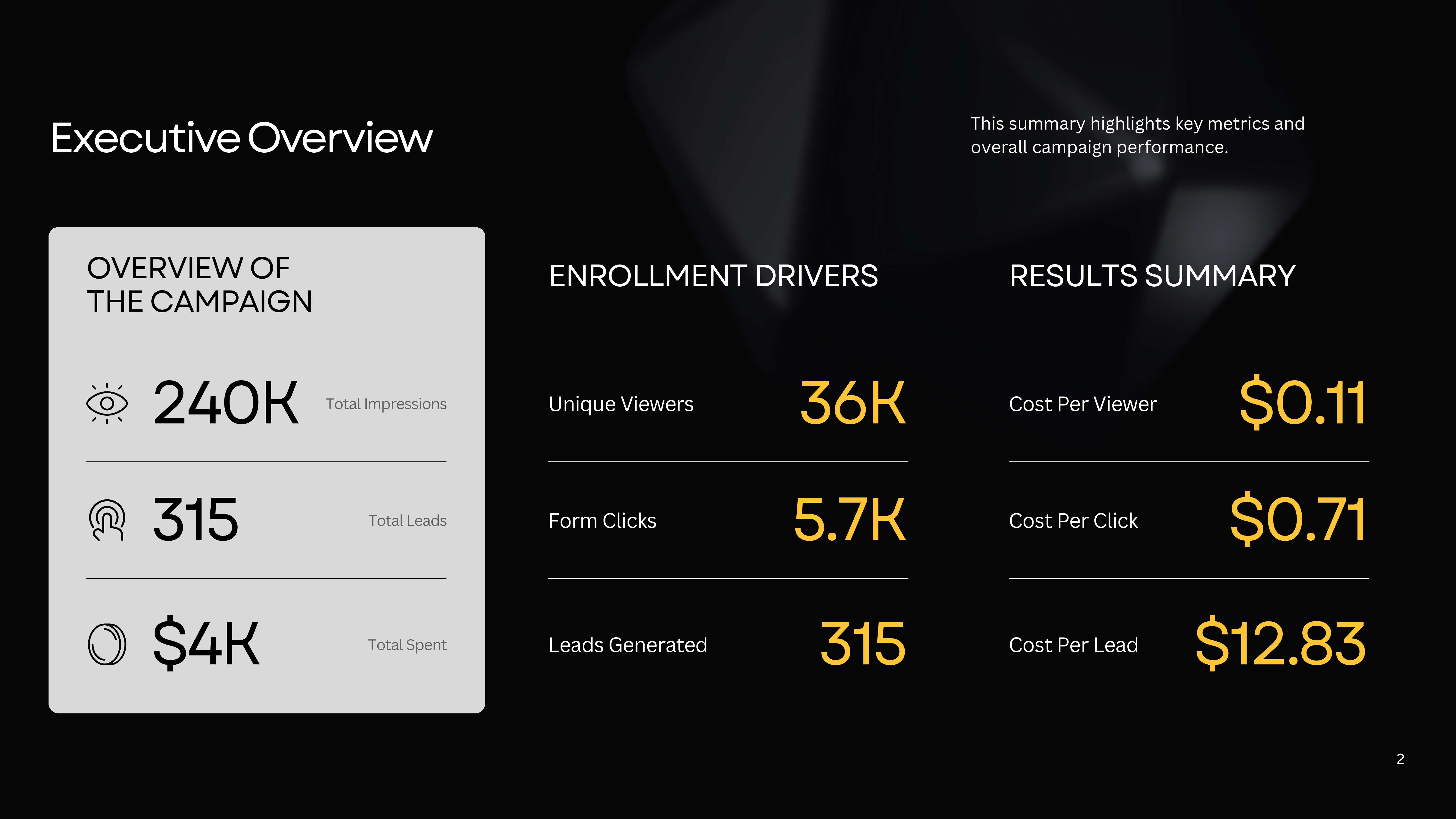
Crawford experienced similar success. Their $4,000 budget generated 315 leads at $12.83 per lead.
Now, let’s say a campaign reaches an enrollment rate of 10% and 15% from generated leads. You're looking at 30 to 45 new students from a single campaign.
When you look at the most recently released report from the National Center for Education Statistics, you’ll see that Kentucky’s total revenues per pupil reached $16,026 in FY 2022, combining state, local, and federal funding. At that rate, 30 to 45 new students represent $480,000 to $721,000 in annual per-pupil revenue. That's the downstream value you're actually measuring against a $4,000 campaign investment.
That is a 120x to 180x ROI.
That’s a much better use of the budget.
But again, it goes back to mission and vision. It’s providing more opportunities for each and every student to succeed.
Three Levers That Drive CPL in Student Enrollment Marketing
There are three variables that control your cost per lead more than anything else: your creative format, your audience targeting, and your conversion path.
1. Creative Format Matters More Than Most Schools Expect
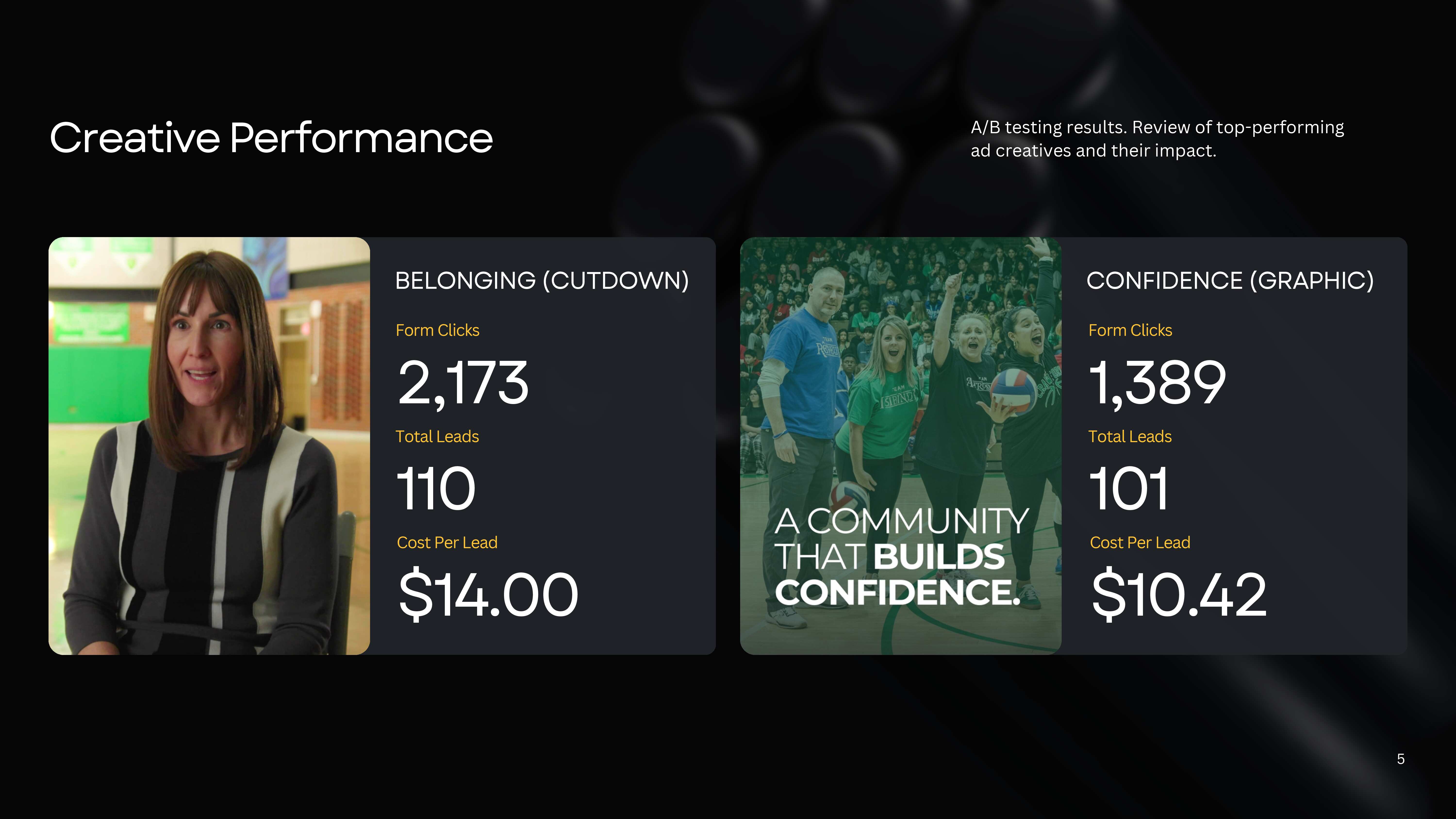
In our campaigns, we run multiple creative types head-to-head. We found that static graphic ads came in at the lowest CPL of the three formats. Nothing surprising there. A simple graphic ad is the easiest to consume and click. So while the static gave us great CPL returns, it was the video production that drove reach and built awareness at scale, generating hundreds of thousands of impressions over a campaign period. The recruitment video specifically helped push the school's story into new households that had never heard of it before. That kind of impression-level work feeds the entire funnel, including the leads that ultimately convert through static formats.
Think of it this way. The video does the heavy lifting at the top of the funnel. The static ad closes the bottom of the funnel. You need both.
What changes is your spend allocation based on the goal at any given point in the campaign.
2. Segment by Behavior, Not Just Demographics
In the campaign we ran for Harrison Elementary, the highest-converting audience segment was parents between 25 and 44. No real surprise there. Those are the individuals actively making school decisions for young kids.
But the middle school campaign told a different story. The 55+ segment accounted for more than half of the total reach and performed at essentially the same cost per lead as the younger segments.
It’s important to have this data on hand for student enrollment marketing.
School districts often have treasure troves of data that apply to the educational processes, but it’s easy to make assumptions from that data that don’t convert. Having the older demographic could signal more grandparent involvement; it could mean an older parent/guardian base, or something else.
What it did show is that knowing demographic information based on interactions with the campaign is crucial. One-size-fits-all doesn’t apply.
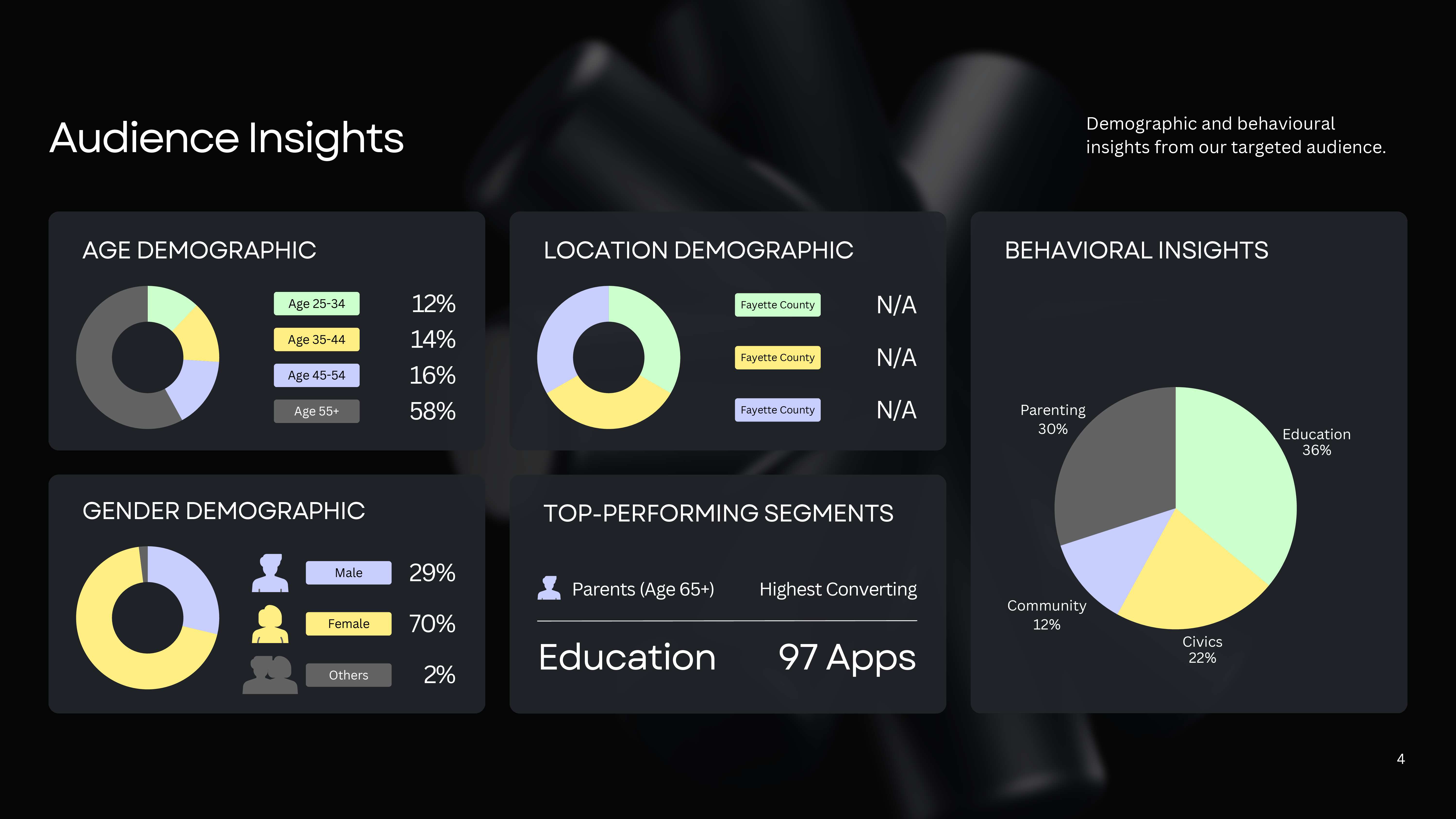
What we do know is that the 55+ group from our middle school campaign raised their hand at the same rate and the same cost as the 25 to 44 segment from our elementary work. That's the power of focusing on the data. Two different campaigns, two different focuses, same CPL. That tells you something important about the effectiveness of our process and how broadly the right message can travel when you're not over-constraining your audience from the start.
The most important factor was what the messaging said to each group, and that the framing in both campaigns resonated.
3. Where You Send Them Changes Everything
This one is the most fixable mistake schools make, and it has the biggest single impact on CPL.
In one of our campaigns, a portion of ad traffic was routed through an informational magnet page before being directed to the actual application. It was well-designed. It answered questions. It had photos. But it added a step. And every additional step between a curious parent and a submitted form is a place where you lose them.
On-platform lead forms, meaning the native Meta lead generation forms that stay inside Facebook or Instagram, consistently outperformed external conversion paths in these campaigns. Meta's own research shows that instant forms deliver around 20% lower cost per qualified lead compared to directing traffic to external website forms. The pre-filled contact information removes friction. Parents don't have to leave the app, load a new page, or retype their details.
If you're routing ad traffic to a landing page that first introduces your school before asking for anything, you're likely leaving efficiency on the table. That content belongs in the ad creative itself. Let the form be the next step.
Let’s Talk About Your Enrollment Campaign
At StoryVid, we handle both sides of the equation. We produce the video and creative assets that make families stop scrolling, and we manage the paid campaign strategy that turns that attention into real leads. That means one team, one brief, one point of accountability for your entire enrollment marketing effort.
If you want to know what a campaign built around your school's specific enrollment goals might look like, a discovery call is the right place to start. We'll talk through your timing, your target audience, and whether your current marketing strategies to increase student enrollment are actually set up to perform. Don't hesitate to reach out.